The right restaurant sign does two jobs at once: it pulls people in from the street and it tells them, in a glance, what kind of place this is. The wrong one either goes unread or looks tired within a season. Most restaurants do not actually need a single sign; they need a small system of them, each doing a different job at a different distance. This guide walks through the main types of restaurant signs, where each one earns its keep, and how to match material and size to the spot.
Storefront signs: the one people see first
The primary sign on the building face is the anchor of the whole system, and it usually takes one of three forms. Channel letters are individual three-dimensional letters, typically built with aluminum returns and acrylic faces and lit internally with LEDs. They read cleanly day and night and are the default for high-traffic roads and shopping centers, though they cost more because each letter is fabricated and wired separately. Cabinet or lightbox signs put the graphics on a translucent face inside a single illuminated box; they are simpler and often cheaper than channel letters and suit a logo-plus-name layout. Dimensional letters, flat metal, acrylic, or PVC letters mounted to the wall without internal lighting, give a refined, understated look for a lower price, and pair well with external gooseneck lighting when the street is dark.
Blade signs for walkable streets
On a downtown block, or in any district where people arrive on foot, a blade sign, also called a projecting sign, mounted perpendicular to the wall does what a flat storefront sign cannot: it is visible to someone walking straight down the sidewalk, before they are standing in front of the door. Blade signs are small, often two to four square feet, and lean on shape and craft rather than size, so a distinctive silhouette or a hand-finished look reads better here than a big logo. They are a strong fit for cafes, bistros, and bars in dense, walkable areas, and they frequently need their own permit because they hang over the public right-of-way.
Sidewalk A-frame signs: the movable workhorse
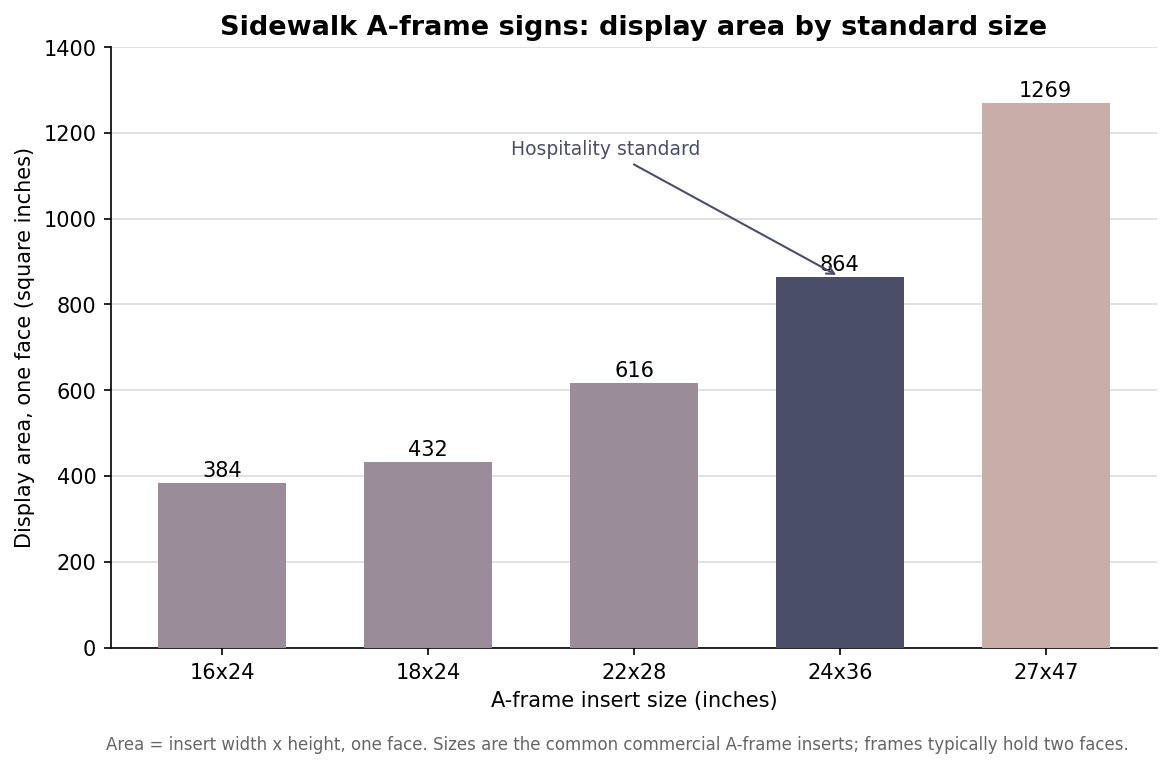
An A-frame, or sandwich board, is the most flexible sign a restaurant owns, because it can change daily and move with the sun and the crowd. It is where the brunch special, the happy-hour window, and the plain “yes, we’re open” message live. The industry-standard insert size is 24 by 36 inches, which offers roughly double the display area of a compact 18 by 24 and stays readable from across a street; smaller 16 by 24 and 18 by 24 frames suit tight entryways, and oversized 27 by 47 frames are built for parking lots and high-traffic curbs. The chart below compares the usable display area of the common sizes.
Weight matters more than it first seems. A light 18 by 24 metal frame can come in under 10 pounds, easy for one person to carry out each morning, while a heavy-duty 24 by 36 plastic frame can run 20 pounds or more before you add ballast. In any real wind, an A-frame needs weight in the base, and many plastic models have cavities you fill with sand or water, or it will end up in the gutter. Inserts range from cheap coroplast that you swap seasonally to printed aluminum or a chalkboard face you rewrite by hand.
Windows, monuments, and the supporting cast
Beyond the headline signs, a few supporting pieces round out the system. Window graphics in cut or printed vinyl turn glass you already have into space for hours, a logo, or a menu preview, and they are among the cheapest signage per square foot. A monument or pylon sign, a freestanding ground-level structure in stone, brick, or metal, matters mostly for restaurants set back from the road or tucked in a plaza, where drivers need to spot you from the lane. And the humble open sign, whether classic neon or LED, is still one of the highest-value square feet on any storefront, because it answers the single question every passerby is actually asking.
Match the material to how long it needs to last
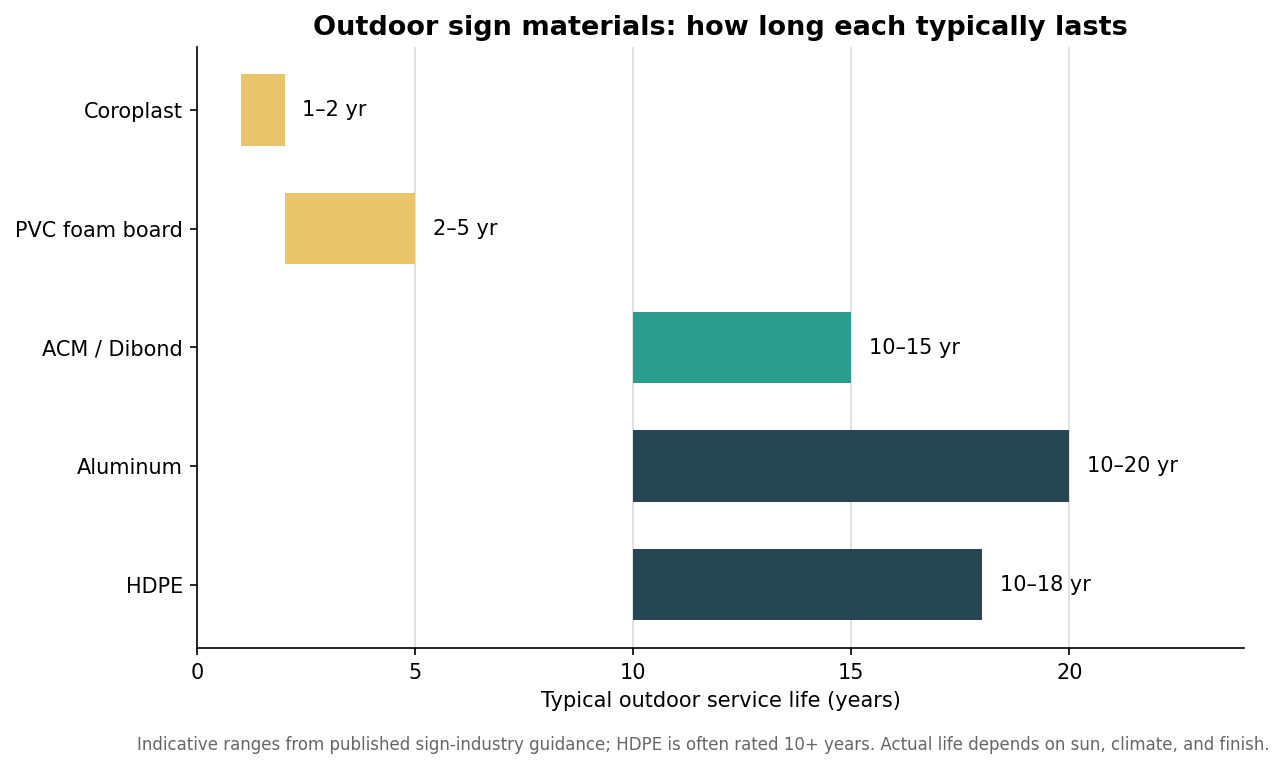
Signs live outdoors, so material choice is really a bet on lifespan. Coroplast is cheap and waterproof but goes brittle in sun within a year or two, which is fine for a disposable special and wrong for anything permanent. PVC foam board lasts a few years but can bow in extreme heat on large unsupported panels. Aluminum and ACM, the aluminum composite panel sold under names like Dibond, are the workhorses of permanent exterior signage: rust-proof, rigid, and typically rated well into the double digits in years. HDPE resists UV, impact, and even graffiti, which is why it shows up on park and industrial signs. The chart below sketches the typical outdoor life of each material; treat the ranges as indicative, because sun exposure, climate, and finish all move the number.
The practical rule is simple: use throwaway materials for throwaway messages, and pay for aluminum or composite on anything you want to install once and forget about.
Placement, permits, and lead times
Before ordering, check two things that routinely trip restaurants up. First, permits. Most permanently mounted exterior signs, and any sign that projects over a public sidewalk, require a municipal sign permit, and historic or downtown districts often add a design-review step. A-frames on the public sidewalk are frequently regulated too, sometimes requiring a permit and almost always required to leave a clear pedestrian path; a common benchmark is at least 36 inches of clear passage, in line with accessibility guidance, though local codes vary and should be confirmed with your city. Second, lead time. Printed signs like A-frame inserts and window vinyl can turn around in a matter of days, but fabricated and illuminated signs such as channel letters involve design, permitting, manufacturing, and installation, which realistically stretches into weeks. Build that runway into an opening date rather than discovering it late.
Put together, a workable restaurant sign system usually looks like one durable storefront sign sized to your traffic, a blade or window treatment if you are on a walkable street, and a movable A-frame for the daily message, each chosen for its spot, its viewing distance, and how long it has to survive out there.